

PT MACI’s Commitment to Building the Future of Operating Room
Yogyakarta, April 24, 2026 – Indonesia’s healthcare industry is entering a new phase that demands a shift in perspective. Hospitals are no longer defined solely by expanding buildings, upgrading equipment, or increasing service capacity. Today’s challenge goes further: how to deliver facilities that are truly safe, efficient, measurable, and capable of functioning as fully integrated systems.
In this context, operating rooms hold a highly strategic position. They are not merely spaces where surgical procedures take place, but one of the most critical points within the PT Mega Andalan Cleanroom Industri Showcases HVAC Solutions“>International-Standard Cleanroom and HVAC Solutions”>hospital ecosystem. Within them, patient safety, medical team readiness, environmental stability, and the quality of supporting systems must converge under one standard: precision.
This understanding forms the foundation of PT Mega Andalan Cleanroom Industri (MACI) in strengthening education and collaboration with various stakeholders in the healthcare sector.
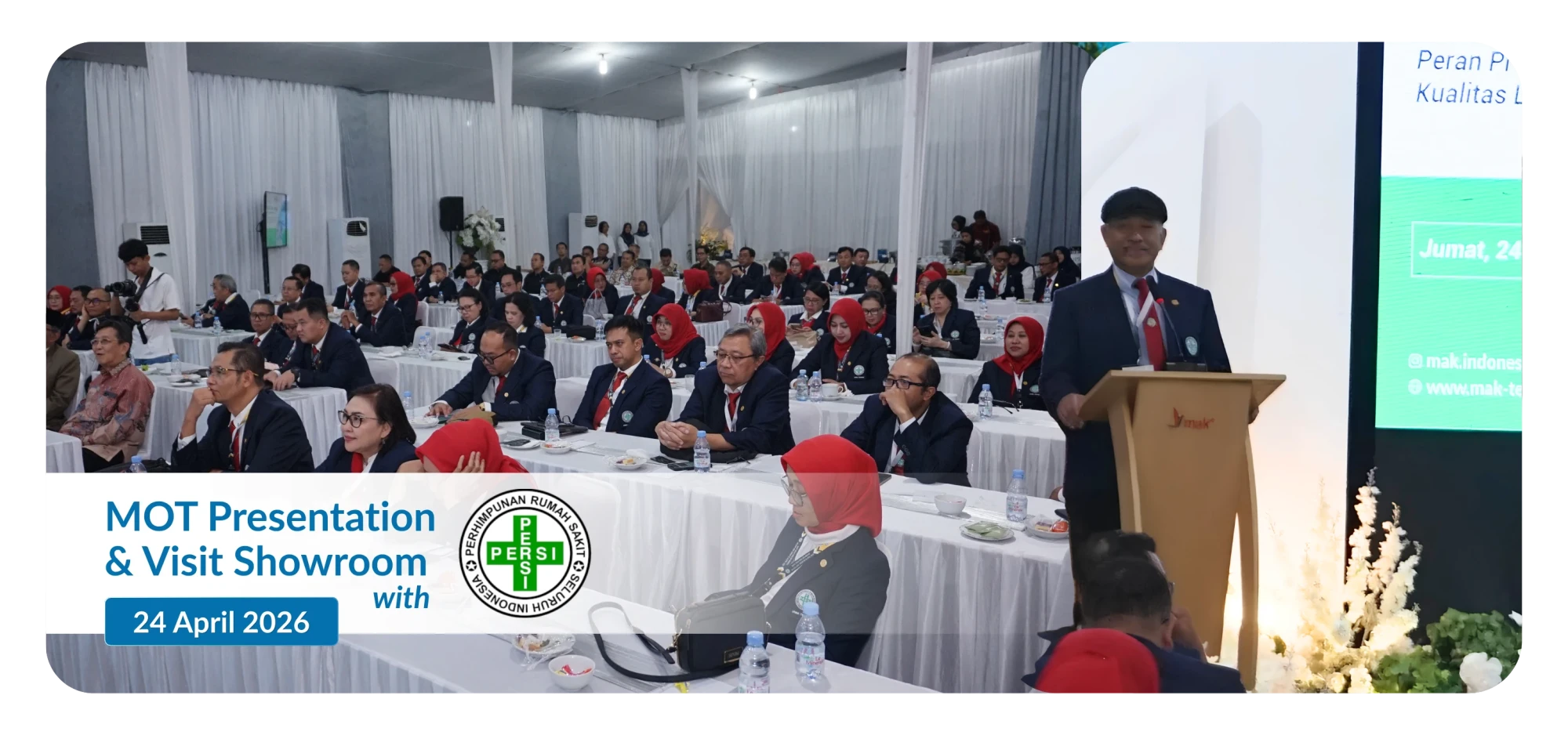
Following its previous engagement with the Asosiasi Rumah Sakit Kementerian Kesehatan Indonesia, PT MACI continued its strategic agenda by hosting a visit from the Perhimpunan Rumah Sakit Seluruh Indonesia Central Java Regional Chapter at Mega Andalan Technopark, Yogyakarta.
This initiative also carries strategic significance for PT MACI. As a company rooted within the industrial ecosystem of Central Java and Yogyakarta, PT MACI views the advancement of hospitals in Central Java as a vital part of strengthening national healthcare services. For PT MACI, geographic proximity is not merely about location—it represents a moral responsibility to help elevate regional healthcare facilities and enhance their competitiveness at a national level.
Through this forum, PT MACI aims to demonstrate that industrial innovation does not always have to originate from major national business hubs. From Central Java, precise, integrated, and high-standard healthcare technology solutions can be developed to meet the needs of modern hospitals across Indonesia.
More than just a gathering, this event serves as a platform for dialogue between industry and hospitals to address real challenges faced by healthcare facilities particularly in the development of modern, system-based operating rooms.
Towards a New Direction in Operating Room Development
The visit of the Perhimpunan Rumah Sakit Seluruh Indonesia Central Java Regional Chapter to the modular operating theatre (MOT) showroom of PT Mega Andalan Cleanroom Industri marks an important moment in understanding how today’s hospital needs can no longer be addressed through partial approaches.
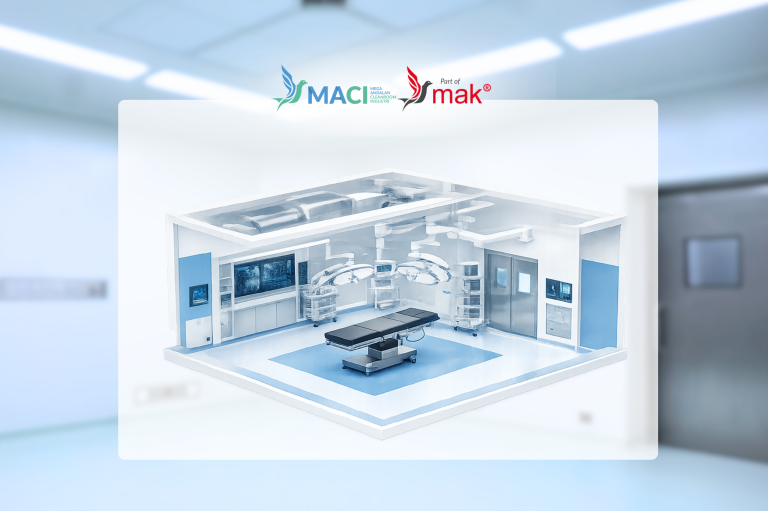
Modern operating rooms require a more comprehensive planning approach. They must be designed by considering the workflow of medical personnel, air quality control, room pressure, temperature, humidity, surface materials, filtration systems, and the integration of supporting equipment.
Therefore, discussions around operating rooms can no longer stop at the question, “What does the room look like?” The more critical question is, “How does the system work?”
During the visit, participants consisting of hospital representatives from Central Java and Yogyakarta were given the opportunity to closely observe how the modular operating theatre Indonesia concept is implemented in practice. This was not only presented through explanations, but also through direct showroom visits that demonstrated how modular panels, cleanroom systems, HVAC, and environmental controls are designed to function as an integrated system.
Hospital Industry Collaboration as a Future Necessity
The series of activities began with opening remarks by H. Susanto Sudiro, M.Sc., Ph.D., representing the Top Management of Mega Andalan Kalasan Group, who expressed appreciation for the presence of the Perhimpunan Rumah Sakit Seluruh Indonesia Central Java Regional Chapter. The participation of hospital representatives in this forum highlights that healthcare facility development cannot be carried out by a single party alone.

(H. Susanto Sudiro, M.Sc., Ph.D., expressed strong appreciation for PT Mega Andalan Cleanroom Industri’s collaborative spirit.)
The Chairman of PERSI Central Java, dr. drg. Edi Sumarwanto, MM., MH.Kes., also conveyed his high appreciation for PT MACI’s commitment to fostering collaboration between hospitals and industry. This message is particularly relevant as hospitals today face increasingly complex demands, while industry players are expected not only to provide products, but also to deliver solutions that truly address real-world needs.

(dr. drg. Edi Sumarwanto, MM., MH.Kes. (bottom) and dr. Heru Satria Gama, M.M. (top))
This synergy is essential because healthcare facility development should not focus solely on physical structures. More importantly, the facilities must be capable of supporting healthcare services, ensuring patient safety, improving operational efficiency, and sustaining hospital systems in the long term.
At this point, industries such as PT Mega Andalan Cleanroom Industri play a strategic role not only as providers of cleanroom systems or modular operating theatre Indonesia, but as partners who can help hospitals understand technical requirements from the earliest planning stages.
For PT MACI, collaboration with PERSI Central Java is not merely a visit agenda, but a commitment to bridging industry capabilities with the real needs of regional hospitals. Hospitals in Central Java hold strong potential to become competitive healthcare referral centers, not only at the regional level but also nationally. Achieving this requires facilities built with the right standards, systems, and technologies.
Therefore, the development of modular operating theatres as modern operating room solutions becomes a key entry point in enhancing hospital competitiveness. When operating rooms are designed with precision, integration, and a strong focus on patient safety, the overall quality of hospital services will naturally improve.
National Medical Device Industry Independence as a Shared Agenda
During the series of activities, the presentation session delivered by dr. Heru Satria Gama, M.M., as part of the expert team from RSUP Dr. Sardjito, also highlighted the issue of national medical device industry independence. This topic is becoming increasingly important as hospitals require solutions that not only meet standards, but are also relevant to the actual conditions and needs of healthcare facilities.
Industry independence is not merely about using domestically produced products. More importantly, it reflects a nation’s capability to build systems, develop technologies, and deliver solutions that address real challenges in the field.
In the context of operating rooms, this independence becomes even more strategic. Operating rooms are not ordinary facilities they require careful planning, precision, technical expertise, and a deep understanding of safety standards.
What is needed are industry players who are not only capable of manufacturing, but also able to think systematically. The role of industry is not just to provide components, but to understand how each component functions within the broader hospital ecosystem.
Operating Rooms Are No Longer Viewed as Spaces, but as Systems

(Ir. David Gunawan Piter, MBA, Operational Director, presenting future business outlook)
In his presentation on future business prospects, Ir. David Gunawan Piter, MBA, Operational Director of PT Mega Andalan Cleanroom Industri (PT MACI), emphasized that operating rooms should be understood as interconnected systems, rather than merely physical spaces where medical procedures take place.
This perspective is crucial because, in practice, an operating room consists of multiple elements that cannot function independently. These include structural design, airflow, pressure systems, temperature, humidity, wall materials, particle control, and HVAC systems that maintain environmental stability.
If even one element is not properly designed, the overall performance of the operating room can be compromised. As a result, risks to patient safety and the effectiveness of medical personnel may increase.
This is why the modular operating theatre Indonesia approach is becoming increasingly relevant. A Modular Operating Theatre (MOT) not only offers a modern operating room design, but also introduces a system that is engineered from the outset to ensure all components function in an integrated manner.
Within this paradigm, an operating room is no longer simply a place where medical procedures occur. It is a system of protection working quietly to maintain environmental stability, reduce contamination risks, and support medical teams in performing procedures more safely.
Operating Room HVAC Systems Must Be Customized
David Gunawan Piter also highlighted one of the key aspects in modular operating theatre Indonesia: the operating room HVAC system. This system must be custom-built, as each hospital has different requirements, building structures, and operational standards.
Every hospital has its own characteristics. Building layout, service capacity, types of medical procedures, existing conditions, air pressure requirements, circulation patterns, and operational standards can vary significantly from one facility to another.
Therefore, operating room HVAC systems cannot be designed arbitrarily. They must be tailored based on the specific technical requirements of each hospital.
Within an operating room, HVAC is not merely a cooling system—it is one of the core systems that controls environmental quality. Through HVAC, temperature, pressure, humidity, and air circulation are regulated to maintain stability in accordance with medical procedural requirements.
If this system is not properly designed, the operating room may fail to maintain ideal environmental conditions. This is where experience, careful planning, and deep technical understanding become essential.
A well-designed operating room is not just one that appears sterile—it must be able to maintain that sterility consistently.
Cleanroom as the Foundation of Patient Safety

During the direct visit to the MOT showroom of PT Mega Andalan Cleanroom Industri, participants gained first-hand insight into how cleanroom systems operate within a modular operating theatre Indonesia.
A cleanroom is not merely a technical term—every element within it serves a critical function. It forms the foundation of a controlled medical environment. Through layered filtration systems, airborne particle control, pressure regulation, and easy-to-clean surface design, cleanrooms help maintain a stable and hygienic operating room environment.
This is why surfaces must minimize gaps that could become points of contamination buildup. Air systems must be capable of controlling particles effectively, and room pressure must be maintained to ensure proper airflow direction according to operational requirements.
At this point, technology takes on a deeper meaning. It is not present merely to make a space appear advanced, but to reduce risks, increase certainty, and protect human lives at their most vulnerable moments.
Ultimately, an operating room is not just a place where medical procedures take place—it is a space of trust. Within it, patients entrust their safety to systems, medical professionals, and facilities that must operate without compromise.
Observing the Implementation of Modular Operating Theatre Indonesia First Hand

One of the key strengths of the showroom visit is that participants not only hear about the concept, but also directly observe how modular operating theatre Indonesia is implemented in practice.
Through the demonstration space, visitors were able to examine how modular operating rooms are constructed using panel systems designed for precision and hygiene. The structure is engineered to minimize open gaps, thereby reducing the risk of contamination.
In addition, the layout demonstrates how design can support the efficiency of medical personnel. Equipment placement, room access, and workflow are carefully planned to ensure smoother and more optimal operational processes.
Participants also observed how cleanroom systems maintain air quality through structured filtration processes. Air within the operating room must be controlled to ensure that particle levels remain within standardized limits.
The HVAC system plays a crucial role in this process—not only in regulating temperature, but also in maintaining air pressure, humidity, and circulation to ensure consistent environmental conditions.
Beyond environmental systems, visitors were also able to examine the details of modular construction and installation. The materials used possess specific characteristics, such as resistance to chemicals and ease of cleaning. The modular installation method further demonstrates how operating room construction can be carried out more efficiently without compromising precision.
From Products to Integrated Solutions
The evolving needs of hospitals indicate that Indonesia’s healthcare industry is shifting from a product-based mindset to a solution-driven approach.
Hospitals can no longer rely solely on purchasing individual components. They require systems that are carefully planned, precisely installed, consistently controlled, and sustainably maintained.
Within the modular operating theatre Indonesia approach, modular panels, HVAC systems, cleanroom technology, control systems, and supporting installations do not operate independently. All elements must function as an interconnected system.
This approach is essential because true innovation is not merely about introducing new technology. Relevant innovation lies in the ability to address the real challenges faced by the industry.
In the hospital context, these challenges include increasing demands for patient safety, space limitations, the need for faster construction, cost efficiency, and ever-evolving operational standards.
Therefore, modular operating theatre Indonesia is not just a construction solution it represents a new way of designing medical facilities that are more adaptive, precise, and safety-oriented.
PT MACI and the Future Development of Cleanroom Systems

Through its series of engagements with the Perhimpunan Rumah Sakit Seluruh Indonesia Central Java Regional Chapter, PT Mega Andalan Cleanroom Industri (PT MACI) demonstrates that the development of modern operating rooms cannot be separated from a comprehensive system-based understanding.
Cleanroom construction cannot be carried out arbitrarily. It requires thorough planning, technical expertise, implementation experience, and the ability to understand the specific needs of each healthcare facility.
As a company focused on cleanroom and modular operating theatre solutions, PT MACI positions itself not merely as a space provider, but as a strategic partner in healthcare facility development.
With capabilities spanning planning, design, manufacturing, and implementation, PT MACI strives to deliver solutions that not only address technical requirements, but also support the broader direction of Indonesia’s healthcare industry—toward facilities that are more independent, more precise, and better prepared for the future.
Through its collaboration with PERSI Central Java, PT MACI also reinforces its commitment as a company rooted in the industrial ecosystem of Central Java and Yogyakarta, actively contributing to the advancement of regional healthcare facilities. This commitment is realized not only through technology, but also through education, collaboration, and openness in sharing knowledge with hospitals.
For PT MACI, the progress of hospitals in Central Java is an integral part of national healthcare advancement. When regional healthcare facilities are able to deliver operating rooms that are more precise, hygienic, and integrated, the competitiveness of Indonesia’s healthcare services will continue to strengthen.
Ultimately, the future of hospitals is not determined by how much technology is used, but by how effectively that technology serves people.
Because a well-designed modular operating theatre Indonesia is not built merely to appear modern it is built to protect and sustain life.
View this post on Instagram