

Hospital Cleanroom: Why It Can’t Be Built Carelessly?
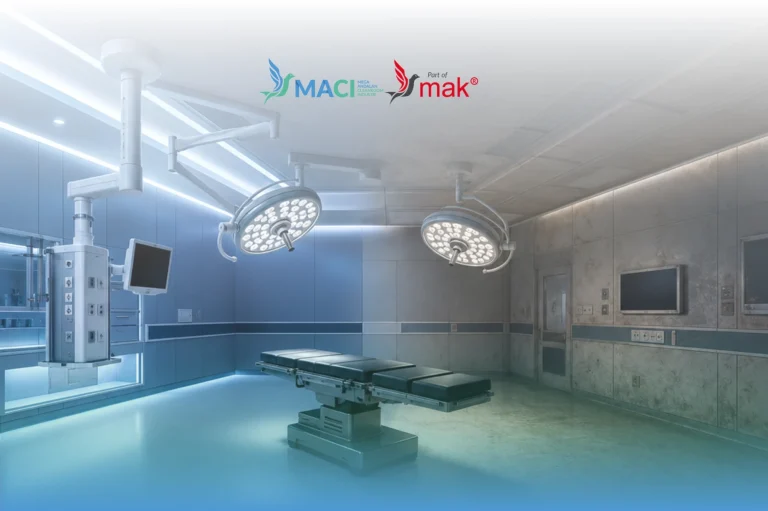
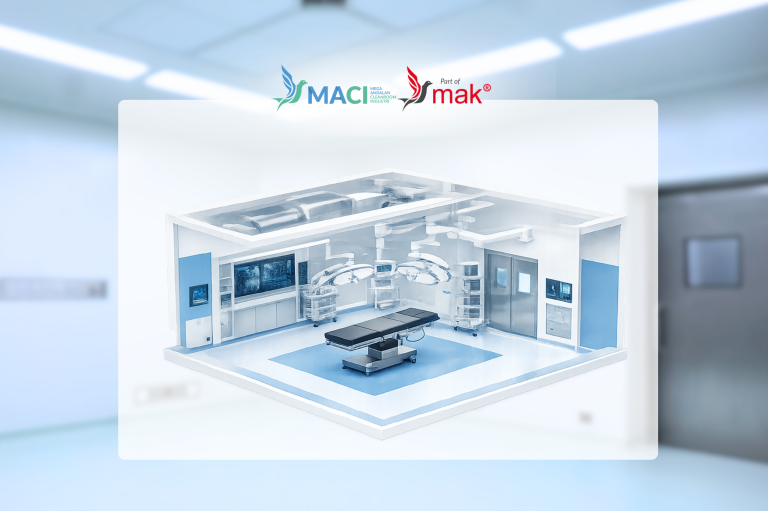
In healthcare facilities, a hospital cleanroom cannot be understood merely as a room that looks clean, neat, and modern. A cleanroom is a controlled environment designed to minimize contamination, maintain air quality, and support medical activities that require a high level of cleanliness.
Therefore, cleanroom construction should not be treated the same as a regular interior project. There are many technical aspects that must be considered, from the air handling system, room pressure, temperature, humidity, air filtration, wall materials, ceiling, flooring, doors, to the control system that maintains the stability of the room environment.
In the hospital context, cleanrooms play an important role in supporting patient safety, medical staff safety, and the overall quality of healthcare services. For this reason, a hospital cleanroom must be designed as an integrated system, not merely as a room that has been physically completed.
Why Hospital Cleanrooms Cannot Be Built Carelessly?
1. Cleanrooms Are Directly Related to contamination control
Cleanrooms are designed to help control the risk of contamination. Contamination may come from the air, human movement, materials, medical equipment, or workflows within healthcare facilities.
If a hospital cleanroom is built without proper technical calculations, the room may look visually clean, but it may not necessarily be able to maintain environmental quality according to medical requirements.
This is where early planning becomes essential. Airflow direction, filtration systems, pressure between rooms, and material selection must be carefully calculated so the room can function according to its sterile purpose.
2. The Air Handling System Is a Key Factor
One of the most important elements in a cleanroom is the air handling system. In medical spaces, the air must not only feel comfortable but also be controlled in terms of quality, airflow direction, temperature, humidity, and pressure.
A cleanroom HVAC system cannot use a generic design. Each room has different requirements depending on its function, risk level, and the cleanliness standard that needs to be achieved. Therefore, HVAC systems in cleanrooms are generally custom-designed.
Errors in air handling system calculations can lead to unstable pressure, uneven air distribution, or suboptimal filtration. As a result, the performance of the sterile room may be disrupted.
3. Air Pressure Must Be Stable and Controlled
In a cleanroom, air pressure plays an important role in regulating the direction of air movement. Proper pressure helps prevent air from less clean areas from entering more sterile areas.
For example, certain areas require positive pressure so that outside air does not easily enter the room. However, this pressure requirement must be calculated based on the room’s function and the possible risk of contamination.
If air pressure is not properly designed, the boundary between clean areas and less clean areas can be disrupted. This is why hospital sterile rooms require a much more complex technical design compared to ordinary rooms.
4. Room Materials Must Support Sterile Areas
The materials used in a cleanroom also cannot be chosen carelessly. Walls, ceilings, floors, doors, and panel joints must support cleanliness needs, ease of maintenance, and contamination control.
Cleanroom surfaces should ideally be easy to clean, have minimal gaps, resist peeling, and not become areas where particles accumulate.
If unsuitable materials are used, the room may become a new source of contamination. Therefore, material selection must be an important part of cleanroom planning from the very beginning.
5. Cleanrooms Must Refer to Applicable Standards and Regulations
Cleanroom construction in healthcare facilities must take applicable standards and regulations into account. Hospitals need rooms that not only function operationally but also meet technical requirements.
References such as Ministry of Health Regulation No. 40 of 2022 are among the important aspects that need to be considered in hospital facility construction.
By taking hospital cleanroom standards into account, the facility being built can be more ready for use, safer, and more aligned with the needs of modern medical services.
Fatal Risks of Choosing the Wrong Cleanroom Contractor
Choosing the wrong partner for cleanroom construction can lead to various problems. The first risk is that the room system may not work according to its intended needs. The room may be physically completed, but the air pressure may be unstable, the temperature may be difficult to control, or the airflow may not follow the planned design.
The second risk is increased repair costs. Design mistakes from the beginning often require hospitals to make major adjustments, from the HVAC system, panels, and doors to the control system.
The third risk is that the cleanroom may not be able to optimally support medical functions. A hospital cleanroom should be a space with stable and measurable environmental performance.
Therefore, choosing a cleanroom contractor in Indonesia should not be based on price alone. Hospitals need to consider technical expertise, experience, production facilities, installation capabilities, and an understanding of applicable medical standards.
PT Mega Andalan Cleanroom Industri, A Trusted Hospital Cleanroom Provider!
As a provider of hospital cleanroom solutions, PT MACI offers several advantages that allow every project to be designed, manufactured, and implemented with a more measurable approach. These include:
1. Strong Mechanical Expertise
PT MACI has a strong foundation in mechanical expertise. This is an important value because hospital cleanroom construction requires detailed technical understanding, not merely the ability to build a room physically.
Mechanical expertise helps every project be designed by considering many important aspects, such as air distribution, pressure stability, temperature control, humidity, and the integration of technical systems within the room.
With this approach, the cleanroom does not only look neat and modern, but is also able to perform optimally according to the operational needs of healthcare facilities.
2. In-House Production Facility in Yogyakarta
One of PT MACI’s advantages is having its own production facility located in Yogyakarta, Indonesia.
Through an in-house manufacturing system, the production process can be directly controlled, from material selection and fabrication to quality supervision of every component.
This advantage is important in cleanroom construction in Indonesia, as the quality and precision of each component greatly affect the overall system performance. With its own production facility, PT MACI can maintain consistent product quality across every project.
3. Supported by a Trained Technical Team
The success of a hospital cleanroom project greatly depends on the quality of the team carrying it out. A good design must be supported by proper installation, testing, and commissioning processes.
PT MACI is supported by professionals developed through Mega Andalan Technical Academy. This program helps ensure that the team has technical competencies aligned with industry needs and is capable of handling various challenges in the field.
With a trained team, the project execution process can run more optimally, more systematically, and with a lower risk of technical errors.
4. Proven Track Record
Experience is an important factor when choosing a cleanroom construction partner. PT MACI is part of Mega Andalan Kalasan, which has been established since 1988 and has a strong track record in hospital equipment and healthcare solutions.
This background is an important asset in handling projects that require high precision, especially medical facilities with complex technical requirements.
With this experience, PT MACI not only understands the products, but also understands how medical room systems must be designed to support hospital operational needs.
5. Compliant with Applicable Medical Standards
In the medical industry, compliance with standards is not merely an added value, but a fundamental requirement. PT MACI ensures that every hospital cleanroom is designed by taking applicable regulations and technical requirements into account.
One important reference is the Regulation of the Minister of Health of the Republic of Indonesia Number 40 of 2022 concerning Technical Requirements for Hospital Buildings, Infrastructure, and Health Equipment.
By following these standards, the cleanroom being built does not only support room cleanliness, but also helps maintain safety, environmental stability, and overall facility performance.
Hospital Cleanrooms Must Be Designed by the Right Partner
Building a hospital cleanroom cannot be done carelessly. This space requires technical planning, proper material selection, a suitable air handling system, and an understanding of applicable medical standards.
A good cleanroom is not only a room that looks clean, but also a space that can consistently maintain environmental quality. Therefore, hospitals need a partner who understands cleanrooms as an integrated system.
PT MACI is here as a partner to help healthcare facilities build cleanrooms that are safe, functional, and aligned with modern operational needs. With mechanical expertise, in-house production facilities, a trained technical team, a strong track record, and compliance with medical standards, PT MACI is the right choice for more structured and trusted hospital cleanroom construction.
Contact us now for a detailed consultation on your cleanroom project.