

Modular Operating Theatre: A New Standard in Healthcare Services
Yogyakarta, April 23, 2026 – Transformation in the healthcare industry is no longer limited to adding facilities, upgrading medical equipment, or constructing new spaces. Today, hospitals are required to implement systems that are more precise, safer, more efficient, and better equipped to meet the demands of modern healthcare services—particularly through the adoption of Modular operating theatre systems in Indonesia.
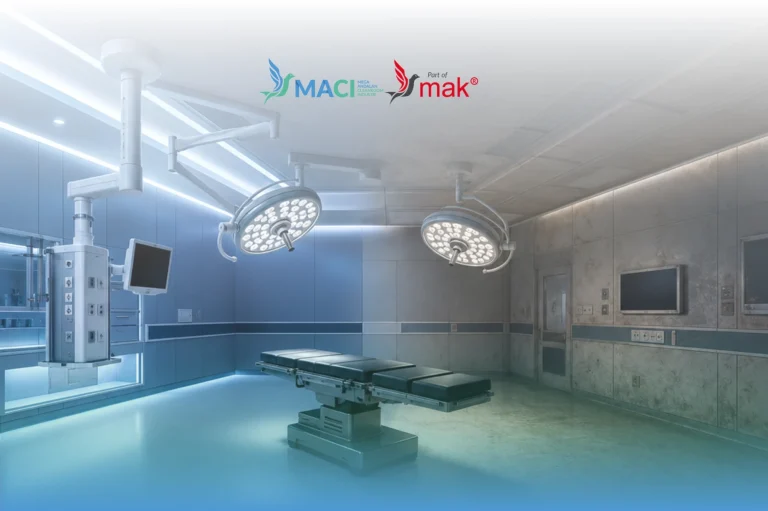
In this context, operating rooms must be redefined. They should no longer be viewed merely as physical spaces where medical procedures take place, but as critical systems that function holistically to ensure patient safety, support medical personnel performance, and maintain a stable surgical environment.
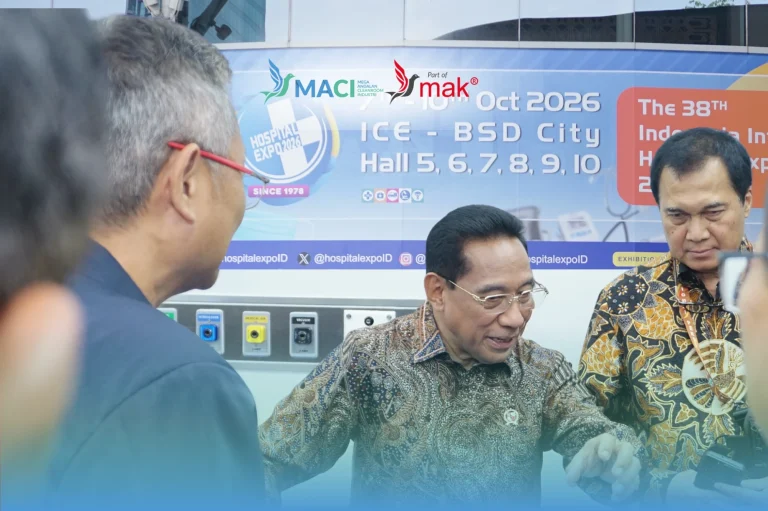
As widely recognized, a modular operating theatre is one of the most critical surgical support facilities, carrying a high level of operational risk within hospital environments. According to the business outlook and insights shared by Ir. David Gunawan Piter, MBA, Operational Director of PT Mega Andalan Cleanroom Industri (PT MACI), during the visit of the Asosiasi Rumah Sakit Kementerian Kesehatan Indonesia (ARSKI)1 to the modular operating theatre showroom at Mega Andalan Technopark, environmental control within operating rooms is a non-negotiable factor.
He emphasized that even the slightest error in controlling airborne particles as small as 0.3 microns can pose serious risks to patient safety. This highlights that operating rooms must not be treated simply as surgical spaces, but as highly integrated systems that must operate with precision.
Every element within the operating room from air quality, room pressure, temperature, humidity, and HVAC systems, to cleanroom implementation plays a crucial role in maintaining a stable medical environment. This principle is also aligned with Permenkes No. 40 Tahun 2022, which sets technical standards for healthcare facilities, including operating rooms and their supporting systems.
This perspective is consistent with the fundamental principles of surgical patient experience outcomes in hospitals. First, primary clinical outcomes, which include patient safety, mortality, morbidity, and the technical success of surgical procedures. Second, operational outcomes, covering length of stay, surgical volume, resource utilization, and cost per case. Third, individual outcomes, referring to how patients experience the entire pre-operative and operative journey.
Therefore, the quality of an operating room impacts not only the technical aspects of the facility, but also service quality, operational efficiency, and overall patient experience. Ultimately, every clinical decision and every supporting system within the operating room must adhere to one fundamental principle: patient safety first2.
Operating Rooms Are No Longer Just Built, They Must Be Designed as Systems

(ARSKI Visit to the MOT Showroom of PT Mega Andalan Cleanroom Industri)
In the conventional paradigm, operating rooms have often been understood simply as sterile spaces equipped with medical instruments. However, in the context of modern hospital requirements, this perspective is no longer sufficient.
An operating room is an ecosystem. Within it, there are interconnected elements such as airflow, room pressure, temperature, humidity, wall materials, panel construction, control systems, hermetic doors, the movement flow of medical personnel, and integration with surgical support equipment.
If even one element fails to function properly, the overall system performance can be compromised. Therefore, the primary challenge for hospitals is no longer just about building an operating room that appears modern, but ensuring that it truly operates in accordance with safety standards and operational demands.
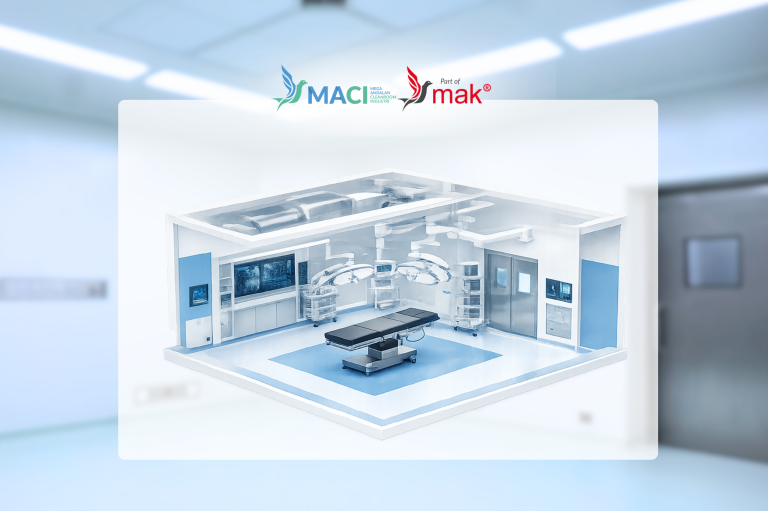
This is precisely why the modular operating theatre Indonesia approach is becoming increasingly relevant. A Modular Operating Theatre (MOT) does not merely offer a clean and modern appearance, but introduces a systematic approach to operating room development from design, materials, and installation, to environmental control and construction efficiency.
Operating Room HVAC: No System Is Ever Truly Identical

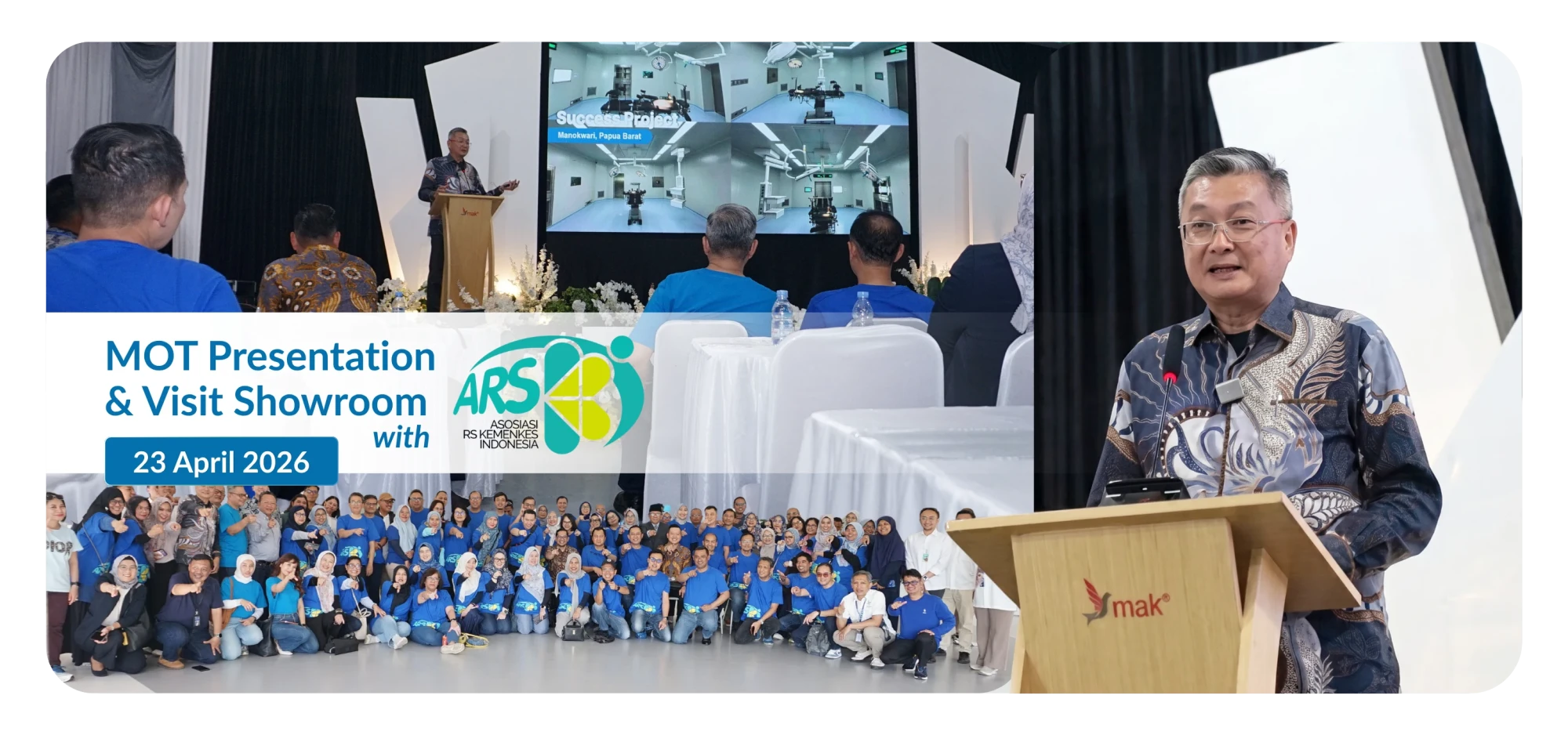
(Ir. David Gunawan Piter, MBA, Operational Director of PT Mega Andalan Cleanroom Industri, presenting future business outlook and perspectives)
Another key point emphasized by David Gunawan is that operating room HVAC systems must be custom-built. This is because no two operating rooms are truly identical. Each hospital has unique requirements, ranging from building layout, service capacity, and types of medical procedures, to existing conditions, air pressure requirements, and targeted operational standards.
Therefore, operating room HVAC systems cannot be developed using a generic approach. They must be custom-designed based on in-depth technical analysis. In the operating room environment, HVAC is not merely a cooling system, it is a critical system that regulates environmental quality, including temperature, pressure, humidity, air circulation, and overall room stability.
At this point, experience becomes essential. Hospitals require partners who are not only capable of installing systems, but also understand how each component works as part of an integrated whole. Because a well-designed operating room is not just one that appears sterile, but one that is able to maintain that sterility consistently.
Cleanroom as the Foundation of Patient Safety

(From left to right: dr. R. Soeko W. Nindito, MARS; dr. Heru Satria Gama, M.M.; and Eric Dwinanto Sudirgo)
During the ARSKI visit to the Modular Operating Theatre (MOT) showroom of PT Mega Andalan Cleanroom Industri, the discussion on modern operating rooms extended beyond technological aspects and addressed the real needs of hospitals in delivering safer, more precise, and well-controlled facilities.
The presence of the Chairman of Asosiasi Rumah Sakit Kementerian Kesehatan Indonesia, dr. R. Soeko W. Nindito, MARS, alongside dr. Heru Satria Gama, M.M. from the expert team of RSUP Dr. Sardjito, as well as Eric Dwinanto Sudirgo, President Director of Polaris Alkes Starindo, the Exclusive National Distributor for the Mega Andalan Kalasan Group (MAK Group) reinforced that operating room development is not merely a matter of technical construction, but part of a broader healthcare ecosystem that requires cross-functional collaboration.
Through this visit, participants gained first-hand insights into layered filtration systems, airborne particle control, pressure regulation, and surface designs that are easy to clean. Cleanroom implementation plays a vital role in creating a more stable and hygienic operating environment, where every element is designed to minimize contamination risks and support patient safety.

At this point, technology takes on a deeper meaning. It is not merely present to make a space appear advanced, but to reduce risks, increase certainty, and safeguard human lives at their most vulnerable moments.
So why is an operating room more than just a place for medical procedures? Because it is a space of trust and hope where patients entrust their safety to systems, medical professionals, and facilities that must operate without compromise.
A Solution-Driven Shift in the Healthcare Industry

This engagement with Asosiasi Rumah Sakit Kementerian Kesehatan Indonesia also highlights an important shift: Indonesia’s healthcare industry is moving from a product-based mindset toward a solution-based approach. Hospitals no longer require standalone components—they need integrated systems that are controllable, easy to maintain, and capable of supporting long-term operational efficiency.
At the showroom of PT Mega Andalan Cleanroom Industri, visitors were able to directly observe how modular panels, HVAC systems, cleanroom technology, and environmental control systems do not operate in isolation. Instead, they are interconnected to create operating rooms that are more precise, more hygienic, and better aligned with the demands of modern healthcare facilities.
This approach is essential because true innovation is not merely about introducing new technology. Relevant innovation lies in the ability to address the real challenges faced by the industry. In the hospital context, these challenges include the need for faster construction, increasingly stringent safety standards, budget limitations, demands for operational efficiency, and the requirement for systems that remain reliable over the long term.
National Medical Device Industry Independence as a Strategic Agenda
Beyond discussing the technical aspects of operating rooms, David Gunawan Piter also highlighted a broader issue: the independence of Indonesia’s national medical device industry.
Indonesia needs a healthcare industry that does not merely rely on imports or function solely as a user of technology. National innovators must play an active role in building, developing, and delivering solutions tailored to the specific needs of domestic hospitals. In this context, he emphasized that the presence of products and systems developed by local industries is becoming increasingly strategic.
PT Mega Andalan Cleanroom Industri (PT MACI) positions itself within this space. As part of an industrial ecosystem with capabilities in manufacturing, planning, design, and implementation, PT MACI acts not only as a cleanroom contractor in Indonesia, but also as a consultant capable of providing comprehensive hospital infrastructure blueprints—particularly for operating room development that minimizes construction errors due to non-compliance with procedures, including certifications from Balai Pengamanan Fasilitas Kesehatan (BPFK).
As the Operational Director of PT MACI, David Gunawan further stated that the company is part of a group with more than 30 years of experience in delivering medical equipment solutions. As part of its corporate social responsibility (CSR) program, hospitals planning to build operating rooms are invited to engage in free planning consultations with the PT MACI team, with no obligation. This initiative serves as an educational effort to collectively advance Indonesia’s healthcare industry.
Ultimately, the future of healthcare facilities will not be determined solely by how advanced the technology is, but by how effectively that technology addresses patient needs. Because a well-designed modular operating theatre Indonesia is not only built to function—but to protect and sustain life.
Footnote:
¹ Asosiasi Rumah Sakit Kementerian Kesehatan Indonesia (ARSKI) is an organization that brings together hospitals under the Ministry of Health of the Republic of Indonesia. It serves as a collaborative forum to improve healthcare service quality and hospital standards.
2 Aortic Healthwork Indonesia, “Successful in Surgery, Yet Failing in Patient Experience.