

Signs That Modular Operating Theatre Indonesia Needs an Upgrade
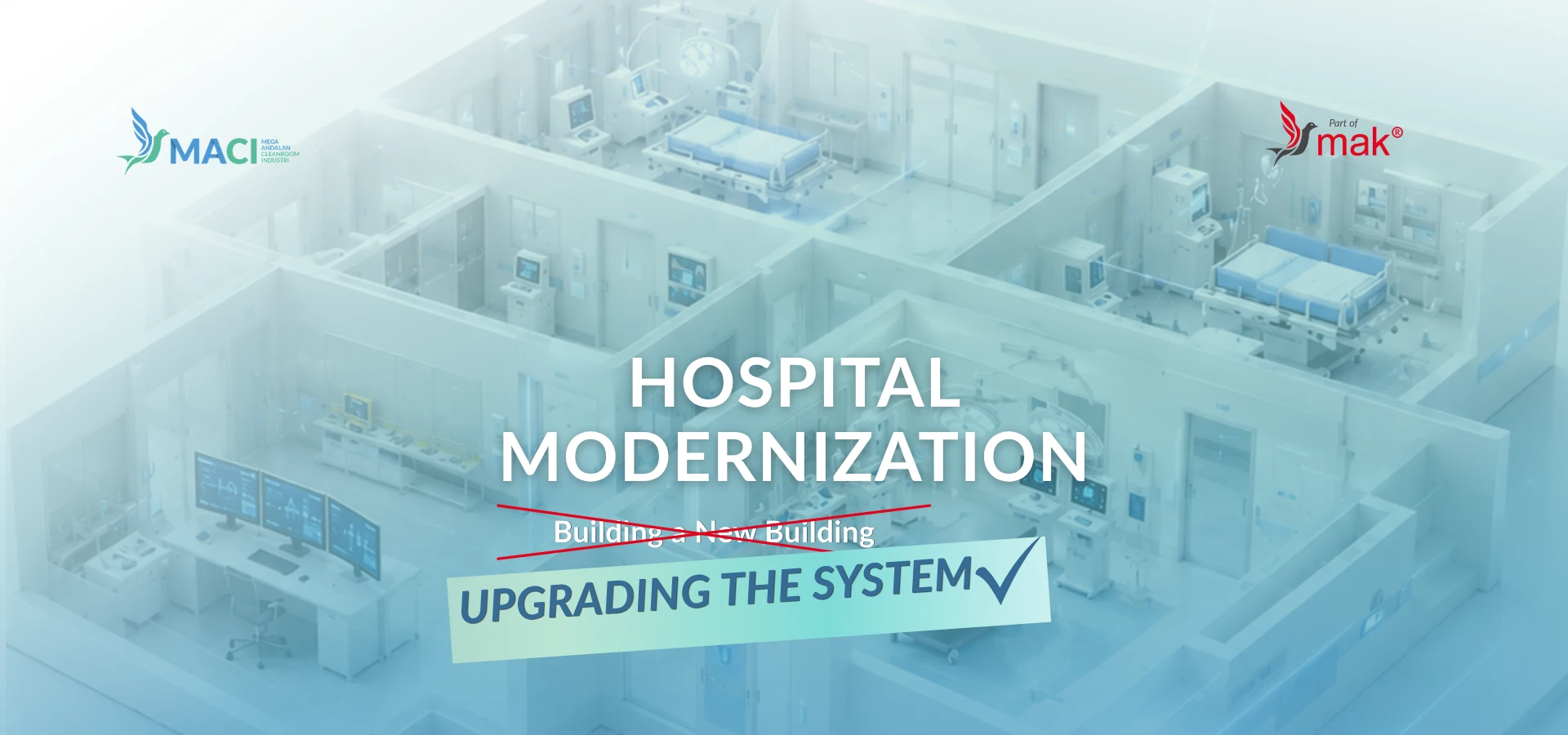
Hospital operating room upgrades are important when HVAC, PLC control panels, air pressure, and door seals begin to decline in performance. .
As previously discussed, modular operating theatre Indonesia consists of several integrated systems. Each system supports one another, which means they cannot stand alone. This is why it is important to entrust hospital cleanroom development to only one cleanroom contractor Indonesia. It is not recommended to have each component handled separately
The integrated components in a modular operating theatre include wall panels, hermetic doors, hospital HVAC, medical gas, operating room supporting equipment, and many more. For more details about the components inside an operating room, you can read the following article.
Because each component has a crucial connection, MOT performance clearly depends on how each system supports one another. If one system experiences a disruption, it will certainly affect the overall performance. Therefore, it is important to upgrade hospital operating rooms gradually.
Yes, the upgrade here is not about building a new room with a huge budget. Upgrade is the process of renewing important systems inside the operating room so they remain stable, safe, efficient, and aligned with the needs of modern medical services.
Why Is Hospital Operating Room Upgrade Important?
Hospital operating room upgrades are important because the operating room is a critical area that requires a highly precise system. Imagine if the system in this room experienced a disruption but was ignored. It would certainly be dangerous for patient safety and the hospital’s reputation.
Further reasons why hospitals need to upgrade include:
- Ensuring that every system in modular operating theatre Indonesia can work optimally
- Ensuring patient safety, supporting medical personnel, and maintaining the hospital’s reputation
- Reducing the risk of unnecessary losses caused by repeated repair costs
5 Signs That Modular Operating Theatre Indonesia Needs an Upgrade
To determine whether the system inside the Operating Room needs to be upgraded, hospitals must pay attention to several key signs. What are they?
1. Pay Attention to the Age of the HVAC
This is the easiest step because hospitals only need to check the age of the HVAC system. Since HVAC plays an important role in regulating operating room air quality, its function is highly crucial.
An operating room HVAC system that has been used for years without upgrades has a higher risk of damage. If this happens, hospitals should start considering a hospital operating room upgrade.
2. The PLC Control Panel Is Still an Older Generation
Along with the rapid development of the digital era, operating room systems also need regular upgrades. Just like Android phones, some applications may no longer be compatible because the system is too outdated. The same thing can also happen to the PLC control panel.
Older-generation PLC control panels usually have limitations in terms of display, integration, and ease of monitoring. In fact, operating rooms require more precise control to monitor important room parameters such as temperature, pressure, humidity, lighting, alarms, and other supporting systems.
3. Air Pressure Disturbance
Unstable operating room air pressure can affect the direction of airflow inside the room. Meanwhile, controlled airflow is needed to help maintain cleanliness and reduce the risk of disruption to the surgical area.
When air pressure frequently changes or becomes difficult to maintain, a hospital operating room upgrade can be a solution to restore system stability. A comprehensive evaluation needs to be carried out, starting from HVAC, doors, seals, to the control system being used.
4. Operating Room Doors Are No Longer Functioning Optimally
Operating room door seals that no longer function properly can cause potential air leakage. This condition can affect room pressure and disrupt the overall performance of the air management system.
Therefore, door and seal conditions need to be checked regularly. If damage occurs too often, hospitals should not only carry out minor repairs, but also start considering a more comprehensive hospital operating room upgrade.
5. The System Is Too Outdated to Support Today’s Surgical Services
Surgical service needs continue to evolve. Medical procedures are becoming more complex, equipment is becoming more diverse, and hospital operational standards are also increasing. If the old system can no longer keep up with these needs, operating room modernization should be considered.
What Happens If Modular Operating Theatre Indonesia Is Not Upgraded?
There are several crucial impacts that hospitals may face if they are late or continue to delay a hospital operating room upgrade. What are they?
1. Risk of Operating Room Stability Disruption
If an outdated operating room system is not immediately upgraded, room stability can be disrupted. Temperature, pressure, humidity, and airflow may become inconsistent.
This condition does not only affect the comfort of medical personnel, but also the readiness of the operating room to support surgical procedures. Therefore, system evaluation needs to be carried out before the problem becomes bigger.
2. Medical Team Efficiency May Decrease
An operating room system that is not optimal can disrupt the workflow of medical personnel. For example, doors that do not function properly, control systems that are difficult to monitor, or unstable room temperature can make the work process less efficient.
In an operating room, every detail has an impact on the smooth flow of procedures. The better the system, the easier it is for the medical team to work in a more organized and safe manner.
3. Maintenance Costs Can Increase
Older systems usually require more frequent maintenance. If not evaluated, repair costs may continue to increase over time.
By carrying out a hospital operating room upgrade, hospitals can reduce the risk of repeated repairs and obtain a system that is easier to control in the long term.
In Reality, Upgrading an Operating Room Does Not Always Mean Building a New Room!
Many hospitals assume that operating room upgrades always mean building a new room. In fact, under certain conditions, upgrades can be carried out gradually according to system needs.
Hospitals can start with a technical evaluation to identify which parts need the most urgent updates. For example, an aging HVAC system, an older-generation control panel, unstable air pressure, or doors that no longer seal properly.
1. Evaluating the Existing System
Before carrying out an upgrade, hospitals need to understand the condition of the existing system. This evaluation is important to determine upgrade priorities more accurately.
With a proper technical audit, hospitals can identify whether the system can still be repaired, needs partial replacement, or requires a more comprehensive upgrade.
2. Gradual Upgrades Based on Priority
A hospital operating room upgrade can be carried out gradually. Hospitals do not have to replace the entire system immediately if budget or operational conditions do not yet allow it.
Updates can begin with the most crucial systems, such as HVAC, air pressure, door seals, or control panels. This way, hospitals can still improve operating room performance without having to stop services on a large scale.
PT MACI: Hospital Operating Room Upgrade Solution
PT Mega Andalan Cleanroom Industri is present as a partner for hospitals that want to carry out a hospital operating room upgrade with an integrated system approach. PT MACI understands that modular operating theatre Indonesia is not only about physical appearance, but also about how the entire system inside it works in harmony.
From needs evaluation, system planning, HVAC, control panels, hermetic doors, door seals, to the integration of other supporting components, PT MACI can help hospitals create operating rooms that are more stable, safe, efficient, and ready to support modern medical services.
Ultimately, modernization does not always mean building a new room from the ground up. In many cases, hospitals can update the systems that need the most attention first, such as HVAC, control panels, hermetic doors, door seals, or monitoring systems.
With the right approach, a hospital operating room upgrade can be carried out gradually according to the facility’s priorities and needs.