

Hospital Operating Room Evaluation: Why Is It Important?

Evaluation of hospital operating room systems is important to ensure that HVAC, control panels, medical gas, hermetic doors, and equipment remain optimal
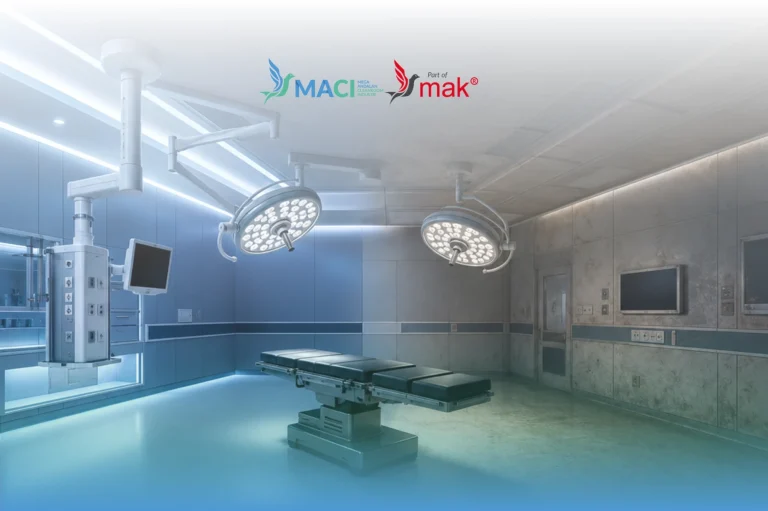
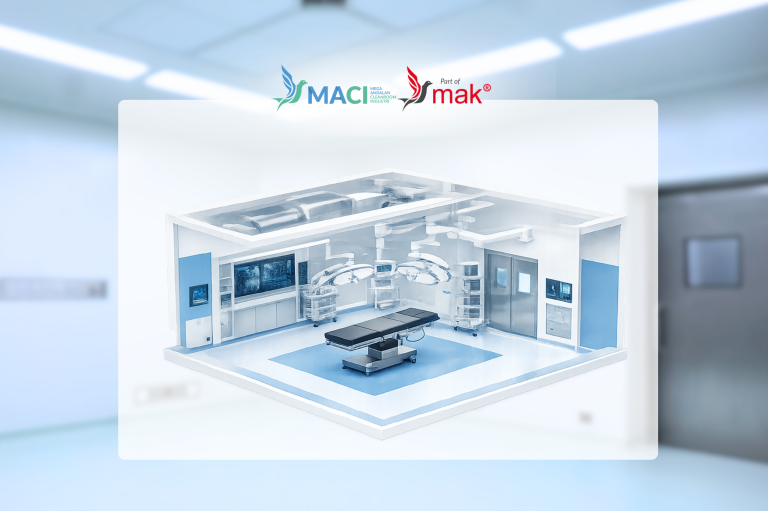
Hospital operating room systems are an important part of supporting the smooth delivery of surgical services. Inside them, various components work in an integrated way within modular operating theatre Indonesia, including HVAC, control panels, medical gas outlets, hermetic doors, lighting, and other supporting equipment.
However, like technology in general, every system has a performance limit. Even though an operating room may still look good visually, it does not necessarily mean that all systems inside it are still working optimally. Therefore, hospitals need to understand that operating rooms also have a “service life” that must be monitored through regular evaluation.
In the context of healthcare facilities, assessment should not only be based on the age of use. What is more important is how each system performs when it is being used. Is it still stable? Is it still safe? Is it still suitable for today’s medical service needs?
Why Should Hospital Operating Room Systems Be Evaluated?
There are several reasons why hospital operating room systems need to be evaluated regularly, including:
1. Directly Related to Patient and Medical Staff Safety
The operating room is a critical area that is directly related to the safety of patients and medical staff in modular operating theatre Indonesia. Every component inside it has an important interconnected function, so any disruption in one system can affect overall performance.
2. Assessing System Readiness in Various Conditions
Through the Hospital Safety Index, WHO emphasizes the importance of assessing structural and non-structural aspects, as well as hospital capacity in facing emergency situations.
This means that hospital facilities should not only appear ready to use, but also need to be assessed based on their ability to remain safe and functional in various conditions.
3. Detecting Performance Decline Early
Regular evaluation helps hospitals determine whether the system is still working according to its function or has started to show performance decline. This allows potential disruptions to be identified earlier before they affect medical procedures.
Therefore, the assessment of hospital operating room systems should not only be based on the length of use, but also on actual performance in the field.
Some indicators to pay attention to include:
- system stability,
- work efficiency,
- frequency of recurring issues.
Components of Modular Operating Theatre Indonesia That Need Attention
Every operating room consists of various systems with different functions. Therefore, operating room evaluation needs to be carried out comprehensively, not only on one component.
1. HVAC and Air Control System
In the operating room, HVAC plays an important role in maintaining air conditions according to the room’s needs. This system is related to temperature, humidity, room pressure, airflow, filter condition, and system efficiency.
Because its function is very important, operating room HVAC needs to be evaluated regularly. The assessment should not only be based on the age of the system, but also on its performance. If the temperature is difficult to stabilize, room pressure is not appropriate, airflow is disrupted, or the filter no longer works optimally, the system needs to be checked further.
ASHRAE/ASHE Standard 170 is also known as a standard that provides minimum requirements for healthcare facility ventilation. This shows that air management systems in healthcare facilities have an important role and cannot be treated like HVAC systems in general buildings.
2. Control Panel
The control panel is an important part of operating several operating room systems. Through this panel, several functions can be controlled and monitored so the operating room can continue to operate according to its needs.
Operating room control panel needs attention when it becomes difficult to operate, the display is no longer clear, the system response slows down, or it no longer supports integration with the latest technology. If this happens, the hospital needs to evaluate whether the panel is still suitable for use or needs to be updated.
In modern hospital operating room systems, the control panel does not only function as an operating button, but also as part of the system that helps simplify room monitoring and control.
3. Medical Gas Outlet
Medical gas is one of the important systems in the operating room. Since it is directly related to medical procedures, this system must always be safe, stable, and ready to use.
Medical gas outlet needs to be evaluated to ensure that the connection, pressure, and outlet function continue to work according to the required needs. If there is a disruption, leakage, or performance decline, it can affect the readiness of the operating room.
Therefore, medical gas checks should not only be carried out when a problem occurs. Regular evaluation is needed so potential disruptions can be prevented early.
4. Hermetic Door
A hermetic door plays a role in supporting the tightness of the operating room. This door system helps maintain room stability, especially in relation to air control and room pressure.
Operating room hermetic door needs to be evaluated when the opening and closing system no longer works smoothly, the seal starts to wear out, the door does not close tightly, or there are gaps that may affect room performance. In an operating room, the door is not only an access point, but also part of the system that supports the room’s overall function.
If the door does not work optimally, the performance of the hospital operating room systems can also be affected, especially in terms of stability and environmental control.
5. Supporting Equipment
In addition to the main systems, the operating room also has various supporting equipment such as operating lamps, surgical pendants, scrub stations, and other equipment that supports the smooth delivery of medical procedures.
Supporting equipment needs to be evaluated in terms of function, stability, installation safety, and ease of use. If equipment starts to have frequent issues, becomes difficult to adjust, or no longer supports medical procedure needs, the hospital needs to consider repair, upgrade, or replacement.
In the operating room, even small disruptions to equipment can affect the medical team’s working comfort. Therefore, supporting equipment is also an important part of evaluating hospital operating room systems.
So, When Should the Operating Room System Be Replaced or Upgraded?
Ultimately, every system that begins to show a decline in performance needs to be evaluated immediately. The results of this evaluation will determine whether the system can still be maintained, requires major maintenance, needs an upgrade, or must be replaced. So, when asked when it should be done, the answer depends on the evaluation results.
Hospital operating room upgrade can be considered when the system is no longer stable, frequently experiences disruptions, is difficult to maintain, inefficient, or no longer meets today’s medical service needs.
In many cases, an upgrade does not always mean building a new operating room from scratch. Hospitals can carry out improvements gradually. In Indonesia, the development and management of hospital facilities need to comply with applicable technical regulations, one of which refers to Minister of Health Regulation Number 40 of 2022 concerning Technical Requirements for Hospital Buildings, Infrastructure, and Medical Equipment.
PT MACI Is Ready to Support Hospital Operating Room System Needs
As a cleanroom contractor Indonesia, PT Mega Andalan Cleanroom Industri (PT MACI) understands that hospital operating room systems must be built with careful planning.
PT MACI provides solutions that include planning, material selection, HVAC, hermetic doors, control panels, medical gas, and other supporting equipment. All of these elements need to be designed to work safely, stably, and in an integrated way.
With its experience and technical capabilities, PT MACI is ready to become a hospital partner in developing hospital operating room systems that meet the needs of modern healthcare facilities.
Ultimately, a good operating room is not only about a clean and modern appearance. An operating room needs a system that is continuously evaluated, maintained, and developed so it can continue to support patient safety and the smooth workflow of medical staff.
Entrust your modular operating theatre Indonesia needs to PT Mega Andalan Cleanroom Industri!