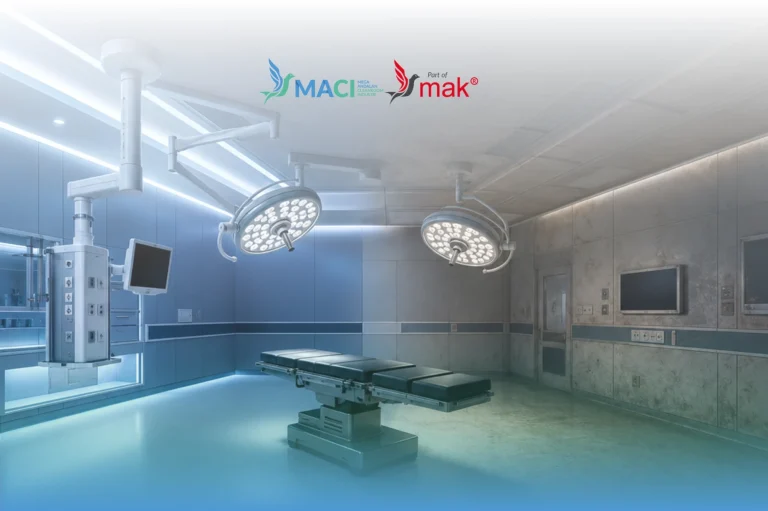


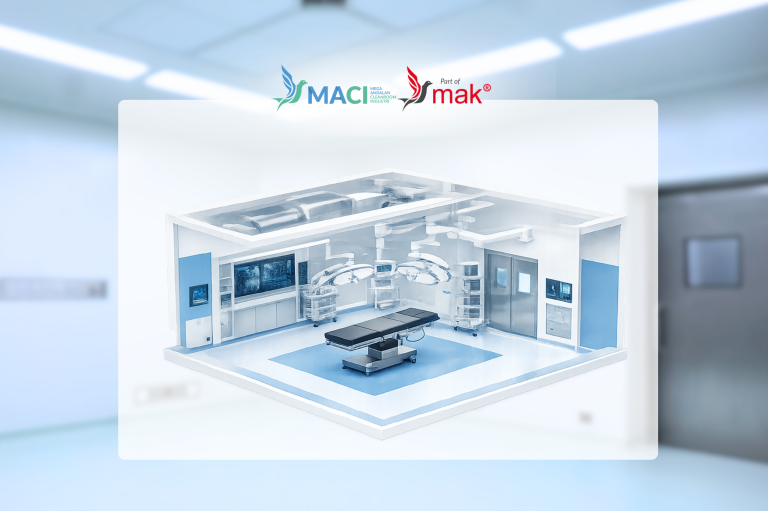
Introducing Modular Operating Theatre with International Standard
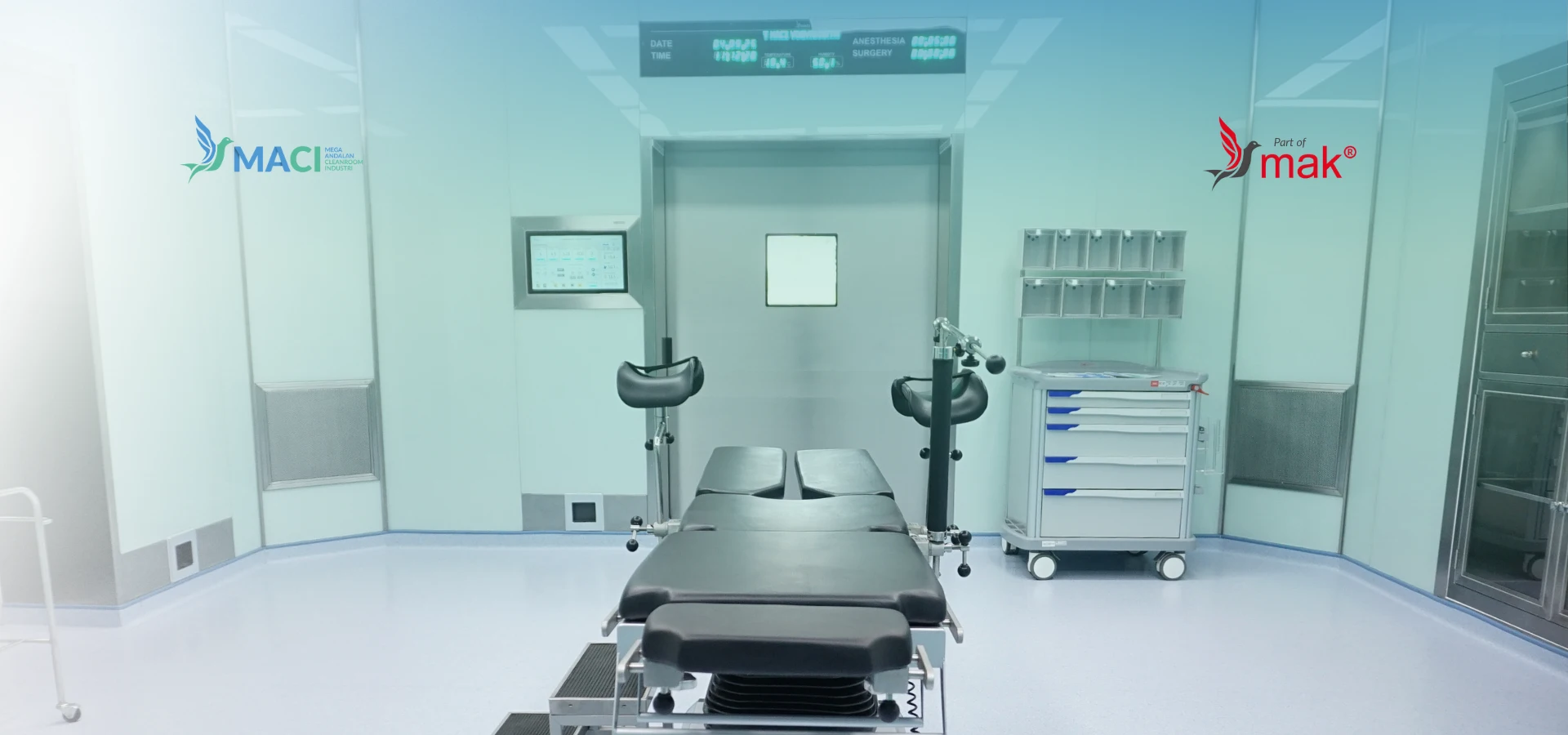
PT MACI modular operating theatre delivers modern operating rooms with cleanroom, custom HVAC, modular panels, and integrated systems.
ptmaci.com – In modern healthcare facilities, the operating room can no longer be viewed as an ordinary room that only requires visual cleanliness. More than that, the operating room is a critical area that must be designed with an integrated system, covering room structure, air management, wall materials, control systems, and medical staff workflow. Every element must work with precision to create a surgical environment that is safe, sterile, efficient, and compliant with required standards.
As a provider of cleanroom solutions for healthcare facilities, PT Mega Andalan Cleanroom Industri (PT MACI) delivers a modular operating theatre designed to meet the needs of international-standard hospital surgical rooms.
This system serves as a modern solution for hospitals seeking to provide advanced operating rooms with high cleanliness standards, optimized medical airflow systems, and a room design that is easy to maintain in the long term.
About Modular Operating Theatre
A modular operating theatre is a modern operating room system designed using modular or prefabricated components with a high level of precision. In this system, every room element – from walls, ceilings, floors, HVAC systems, hermetic doors, lighting, medical gas, to room control systems – does not stand alone, but is designed as one fully integrated unit.
One of the main advantages of a modular operating theatre is the use of materials with smooth surfaces, minimal gaps, easy-to-clean characteristics, and resistance to cleaning chemicals. These features are essential because operating rooms require a much higher level of hygiene compared to general hospital areas. With a design that minimizes open joints, the risk of dust, dirt, and microorganism accumulation can be reduced more effectively.
As supporting evidence, according to Andiyan et al. in the scientific article “Modular Operating Theater (MOT) Based Integration System in Hospital Operating Rooms”, published in the Journal of Population Therapeutics and Clinical Pharmacology Vol. 29 No. 02, 2022, an integrated MOT system is an important part of modern medical infrastructure. The integration of electrical systems, air management, wall materials, and control systems is considered crucial to supporting medical staff response, maintaining operating room sterility, and meeting healthcare facility safety standards.
With this approach, modular operating theatre becomes a relevant solution for hospitals that require operating rooms that are hygienic, efficient, and easily scalable to meet the future needs of healthcare facilities.
MACI Modular Operating Theatre: Integrated Solution for International-Standard Operating Rooms
MACI modular operating theatre is designed with an end-to-end solution approach, covering planning, material supply, production, installation, and commissioning of the operating room system. This approach ensures that every element – from modular panels, cleanroom systems, HVAC systems, hermetic doors, to environmental control systems – can work harmoniously as one integrated unit.
As a provider of cleanroom solutions, PT MACI understands that an international-standard operating room cannot rely solely on high-quality materials. Precise system integration is required to ensure that air quality, room pressure, temperature, humidity, and medical staff workflow can be maintained optimally during surgical procedures.
With this integrated solution, hospitals can have operating rooms that are more sterile, efficient, easy to maintain, and ready to support the needs of modern surgical services. MACI modular operating theatre not only addresses today’s operating room development needs, but also provides flexibility for future healthcare facility expansion.
8 Advantages of MACI Modular Operating Theatre
Operating room construction requires precise integration between the room structure, air management, materials, control systems, and medical utilities. Therefore, modular operating theatre should not be understood merely as a modular operating room, but as a complete system that must be designed comprehensively from the very beginning.
As a cleanroom contractor in Indonesia, PT MACI delivers an integrated approach to ensure that every element within the operating room can work harmoniously. From planning, material selection, panel production, installation, to air management system commissioning, the entire process is designed to ensure that the operating room is ready to support the needs of modern surgical services.
This approach forms the foundation of the following key advantages of MACI Modular Operating Theatre:
1. End-to-End Solution Under One Integrated Process
PT MACI provides a comprehensive solution, starting from initial design, material supply, component production, installation, to the commissioning of the medical air management system. The entire process is managed in a coordinated manner to ensure a more precise and consistent final result.
This one-stop approach helps hospitals reduce the risk of mismatch between design, materials, and on-site implementation. As a result, the development of modular operating theatre can be carried out more efficiently and in line with the needs of healthcare facilities.
2. Four Premium Wall Panel Material Options
Unlike conventional walls that tend to be porous and prone to moisture, modular panels are designed to be more hygienic, durable, and easy to clean. These materials help create a room structure that is more organized, precise, and suitable for medical areas.
PT MACI provides four panel material options: Sandwich Panel, Box Framed Panel, Tempered Glass Panel, and Stainless Steel. Each material can be customized according to the needs of the surgical room, hospital aesthetics, and the desired cleanliness standards.
All four options are designed with smooth surfaces, chemical resistance, and the ability to help break the chain of bacterial growth. With the right material selection, the operating room can have a more hygienic structure that is easier to maintain.
3. Fast, Clean Installation with Minimal Operational Disruption
The knock-down system in modular operating theatre allows installation to be completed faster than conventional methods. Pre-manufactured components can be installed on-site more efficiently with minimal wet work.
This advantage is especially important for hospitals undergoing renovation or expanding surgical services. With faster and cleaner installation, hospitals can reduce operational downtime, allowing services to continue without long interruptions.
4. Medical Airflow Standards with Laminar Air Flow and HEPA Filter
Air quality is one of the most important aspects of an operating room. PT MACI applies a medical air management system supported by Laminar Air Flow and HEPA filter to create cleaner and more controlled airflow.
This system helps create positive air pressure while supplying ultra-clean air to the operating table area. With properly designed airflow, contaminant particles can be pushed away from critical areas, helping maintain the Quality of the operating environment.
5. PLC-Based Control System
PT MACI provides a PLC control system, or Programmable Logic Controller, as the smart control center in the operating room. Through a touchscreen panel, medical teams can monitor and adjust various room parameters more practically.
This system allows temperature, humidity, lighting, and medical gas alarm monitoring to be controlled from one central point. With responsive control, the operating room can be managed more efficiently and precisely.
6. Hermetic Doors to Maintain Pressure Stability
In an operating room, pressure stability is an important factor in maintaining environmental quality. Therefore, the use of hermetic doors helps keep room conditions controlled.
Medical-grade hermetic doors are designed to be airtight and can be equipped with precision sensors for touchless access. This feature helps reduce contamination risk while supporting efficient movement of medical staff within the operating room area.
7. Custom HVAC System for Every Hospital
One important principle in developing a modular operating theatre is that every cleanroom requires a different HVAC system. Each hospital has different architecture, capacity, workflow, and room requirements.
Therefore, PT MACI designs the operating room HVAC system custom-built based on the condition and needs of each facility. This approach helps ensure energy efficiency, humidity control, pressure stability, and long-term system reliability.
8. Compliant with Healthcare Facility Standards and Ministry of Health Regulations
The operating room is a critical area that must comply with strict technical standards and regulations. Therefore, every specification in MOT development must be designed by considering operational feasibility, patient safety, and hospital accreditation requirements.
PT MACI ensures that the technical specifications of cleanroom and MOT installation are designed to support the regulations of the Ministry of Health of the Republic of Indonesia. With this approach, hospitals can have operating rooms that are not only modern in design but also aligned with applicable healthcare facility standards.
In addition, proper implementation of hospital cleanroom systems helps support air quality, room cleanliness, and medical environment stability. This serves as an important foundation in creating safer and more professional surgical facilities.
Realize Your Hospital’s modular operating theatre with PT MACI
For hospitals looking to build or upgrade their surgical facilities, modular operating theatre by PT MACI can be a strategic choice for creating an operating room that is precise, integrated, and ready to meet the needs of modern healthcare services.
With the support of cleanroom solutions, custom HVAC systems, premium wall panels, PLC-based control, and an end-to-end approach, PT MACI helps hospitals build operating rooms that are safer, more efficient, easier to maintain, and aligned with the future needs of medical services.