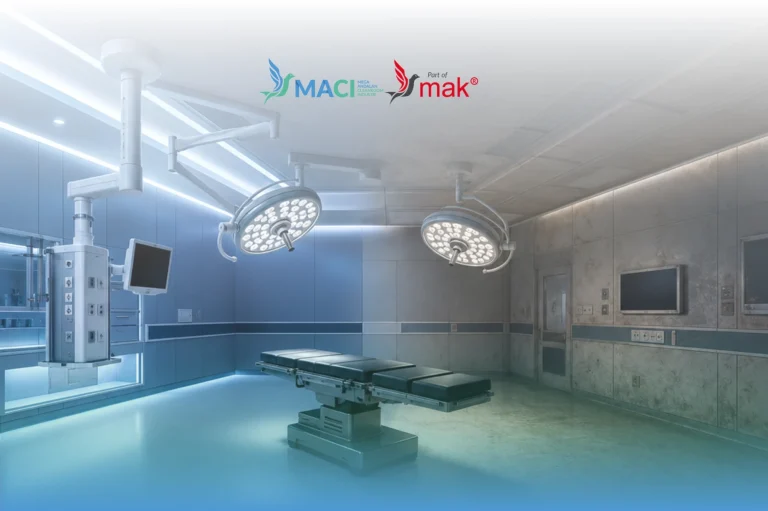


MACI Modular Operating Theatre: Modern Operating Room Solution
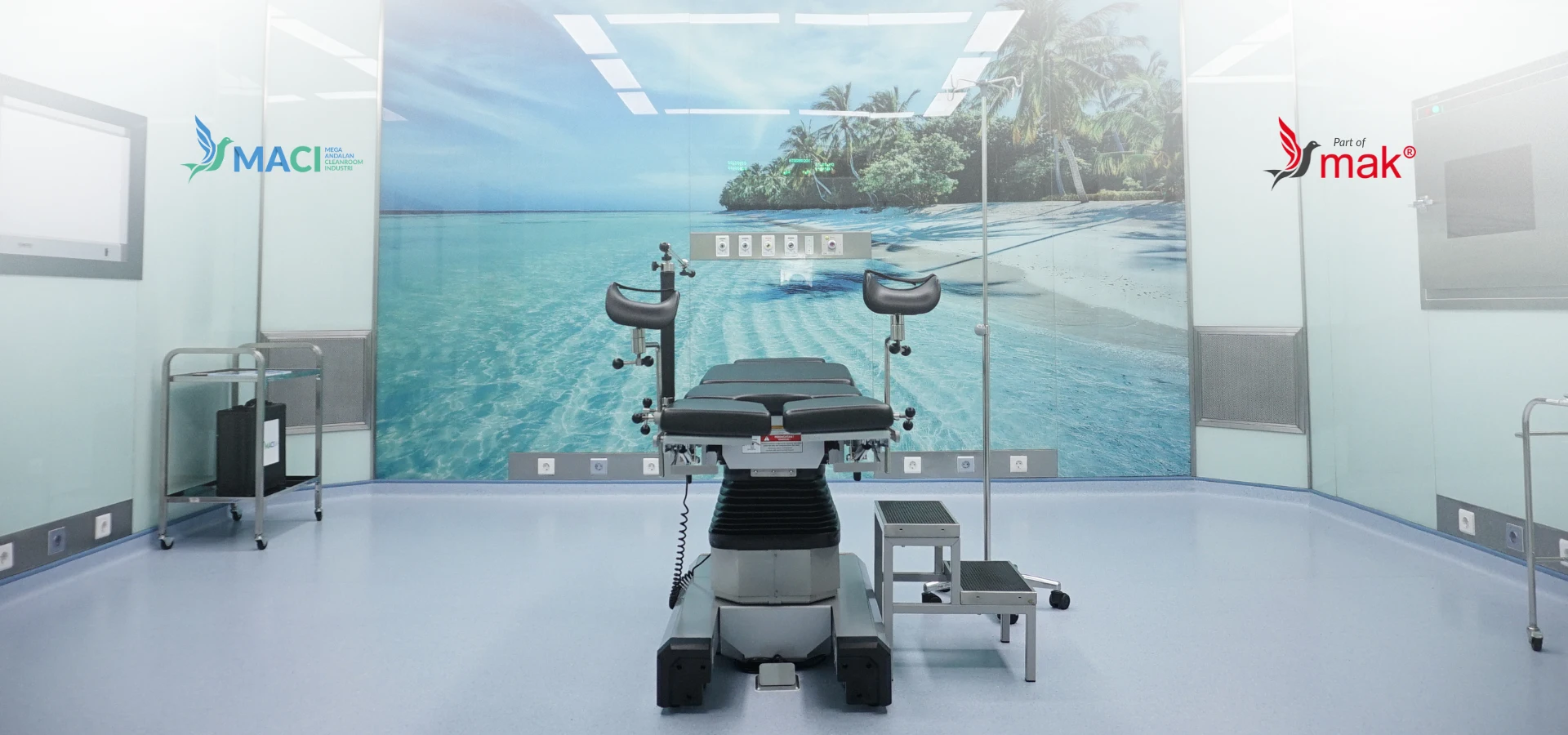
MACI modular operating theatre helps hospitals create modern, sterile, efficient, and integrated operating rooms.
The operating room is not merely one of the most important rooms in a hospital. More than that, it is a central medical service area directly connected to patient safety, surgical effectiveness, and the overall quality of hospital operations.
As modern healthcare facilities continue to evolve, the need for sterile, efficient, and integrated operating rooms is becoming increasingly essential. Hospitals can no longer rely solely on operating rooms that appear visually clean; they also require systems capable of precisely controlling air quality, room pressure, workflow, and the integration of medical utilities.
This is where modular operating theatre comes in as a modern operating room solution. Through a modular approach and an integrated system, the operating room can be designed to be more efficient, hygienic, easier to maintain, and capable of supporting optimal surgical service performance.
What Is a Modular Operating Theatre?
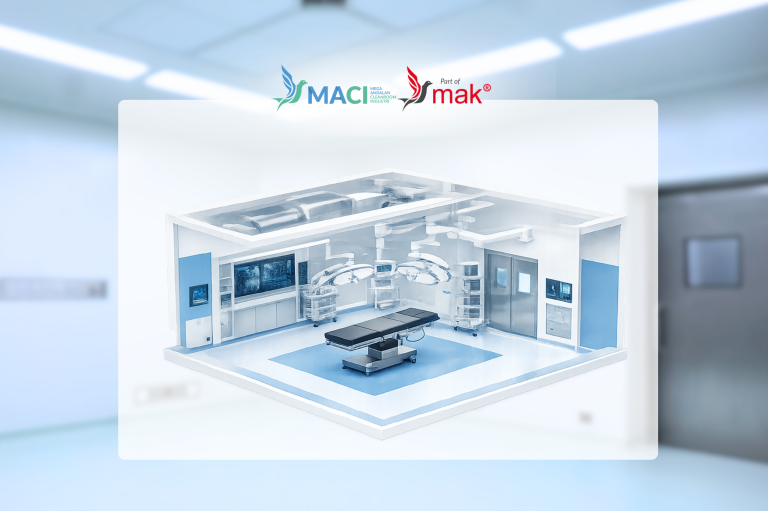
A modular operating theatre is a modern operating room system built using a modular approach, where key elements such as wall panels, ceilings, operating room HVAC systems, cleanroom systems, lighting, medical gas, and environmental control are designed as one integrated unit.
In the concept of a modular operating theatre, the operating room is not merely seen as a physical area where medical procedures take place. Instead, it should be understood as an interconnected system involving room structure, air quality, pressure, temperature, humidity, lighting, and medical staff workflow.
One of the main strengths of a modular operating theatre lies in the integration of cleanroom systems, HVAC, and modular panels. The cleanroom system helps maintain air quality, HVAC regulates environmental stability, while modular panels support a hygienic, organized, and easy-to-clean room structure.
With this integration, hospitals can have operating rooms that are better prepared to meet the demands of modern medical services, whether in terms of safety, efficiency, or long-term operational sustainability.
Why Is a Modular Operating Theatre Needed by Modern Hospitals?
Modern hospitals need operating rooms that can fully support surgical services. The operating room is not only a place for medical procedures, but also a strategic facility that influences service quality, hospital reputation, and long-term business sustainability.
Here are five reasons why modular operating theatre is increasingly needed by modern hospitals.
1. The Central Surgical Installation Acts as the Hospital’s Core Economic Engine
Quoting Aortic Healthwork, surgical services and all medical specialties that utilize operating rooms are referred to as the core economic engine of a hospital. This means that surgical services make a highly significant contribution to the hospital’s revenue, margins, and brand positioning.
Unlike outpatient services or polyclinics, which rely heavily on a high number of patient visits, surgical rooms have a different economic characteristic. They depend on higher transaction value, commonly known as ticket size. Therefore, the performance of surgical services can have a major impact on the overall business direction of a hospital.
In short, controlling the performance of surgical services means controlling the direction of the hospital’s business. If the Central Surgical Installation plays such a vital role, then the operating room must be designed with a system that can truly support optimal service performance. In this context, modular operating theatre becomes a relevant solution because it can provide a more stable, efficient, and integrated operating room environment.
2. Supporting a Sterile Operating Room with Minimal Contamination Risk
Through a precise modular panel system and easy-to-clean surfaces, modular operating theatre can help create a more optimal sterile operating room environment. Its minimal-gap design also helps reduce areas where dust, dirt, or microorganisms may accumulate.
In addition, the support of a cleanroom system in Indonesia allows air quality inside the operating room to be more controlled. With filtered air and distribution designed according to specific needs, the operating environment can be maintained in safer conditions for both patients and medical staff.
3. Improving the Efficiency of Operating Room Construction and Renovation
Hospitals often face challenges when building or renovating operating rooms. A lengthy process can disrupt medical services, while design errors may lead to additional costs in the future.
With a modular approach, the operating room construction process can be carried out more efficiently. Room components such as panels, ceilings, and supporting systems can be designed from the beginning with more precise dimensions and specifications. This helps accelerate the installation process without compromising quality.
4. Supporting Hospital Reputation and Brand Positioning
The quality of hospital facilities influences the perception of patients, doctors, and healthcare partners. Hospitals with modern, clean, and integrated operating rooms will appear better prepared to provide safe and professional medical services.
Because surgical services contribute significantly to a hospital’s brand positioning, the quality of the operating room should not be viewed merely as a technical investment. A well-designed operating room can become an added value in building public trust in the hospital.
By implementing modular operating theatre, hospitals can demonstrate their commitment to patient safety, service efficiency, and higher facility standards. This is essential in a healthcare industry that increasingly demands quality and professionalism.
Bring Modular Operating Theatre to Your Hospital with PT MACI
The development of a modular operating theatre requires careful planning, strong technical understanding, and comprehensive system integration capabilities. An operating room cannot be built based solely on physical appearance, because every element inside it must support cleanliness, safety, efficiency, and medical service performance standards.
As a company focused on cleanroom solutions and modern healthcare facilities, PT Mega Andalan Cleanroom Industri (MACI) serves as a strategic partner for hospitals seeking to develop more integrated, precise, and high-standard operating rooms. With its experience and capabilities, PT MACI supports the development of modular operating theatre solutions tailored to the needs of each healthcare facility.
Beyond that, PT MACI has also proven its strengths through several key advantages:
1. Supported by Strong Mechanical Industry Expertise
PT MACI has a strong foundation in mechanical industry experience. This expertise serves as an important basis for designing operating room systems that are not only visually well-organized, but also technically optimized.
In the development of modular operating theatre, mechanical understanding is essential, particularly to ensure that the integration between room structure, HVAC systems, cleanroom systems, pressure control, and medical utilities can operate with precision.
2. Integrated In-House Production Capabilities
One of PT MACI’s key strengths is its integrated in-house production capability. This allows the development process of operating room components to be carried out with better and more consistent quality control.
With this capability, every element – such as modular panels, supporting systems, and other technical requirements – can be designed according to project specifications. As a result, hospitals receive solutions that are more precise and aligned with actual field requirements.
3. Supported by a Competent and Experienced Technical Team
The development of a modern operating room requires a team that understands technical details at every stage of the project. PT MACI is supported by a competent and experienced technical team in handling the needs of healthcare facilities.
From planning, design, production, installation, to on-site implementation, every process is carried out with a measured approach. This technical support becomes an important factor in ensuring that the operating room system can function optimally.
4. Proven Track Record and Industry Experience
Experience is an important factor when choosing a partner for cleanroom or modular operating theatre development. PT MACI has an industry track record that supports its capability in delivering integrated medical room solutions.
With this experience, PT MACI understands that every hospital has different needs. Therefore, each solution is designed by considering facility conditions, operational workflow, cleanliness standards, and long-term development requirements.
Conclusion
The Central Surgical Installation plays a vital role in hospitals, both in terms of medical services and business performance. If surgical services are one of the hospital’s core economic engines, then the operating room must be designed to support optimal service performance.
Modular operating theatre becomes a modern operating room solution that can address this need. With the integration of cleanroom systems, HVAC, modular panels, and environmental control systems, the operating room can be designed to be more sterile, efficient, precise, and ready to support higher-quality surgical services.
For hospitals looking to improve facility standards and strengthen surgical services, operating room development cannot be done carelessly. It requires a partner with a strong technical foundation, industry experience, production capabilities, and a solid understanding of healthcare facility standards.
In this regard, PT MACI serves as a strategic partner in delivering a modern, integrated, and hospital-specific modular operating theatre. Consult your hospital’s cleanroom needs with PT MACI today.